

Guide
Ariane-6 and beyond: lessons in launch success and satellite tracking.
Christopher Kebschull · 2 min read · 9 July 2024
While counting down to the Ariane-6 launch, we break LEOP down from a Space Traffic Management perspective. What do the numbers say, what does the operations room look at, and why is fast, accurate tracking so important?
Launching success: insights from 2006 to 2020
We have observed a success rate of over 90% for all launches between 2006 and 2020.* This impressive figure is the result of continuous improvements and testing. For example, the Ariane-5 launcher achieved an approximate success rate of 98%. Such high reliability is typically achieved after extensive operational refinement.
Most launchers experience initial failures during their maiden flights, which are then addressed to ensure subsequent success. The Soyuz-2, with around 170 launches, maintains a success rate of about 96%, while Falcon-9, with more than 360 launches, has achieved nearly 99%. Launchers like the Soyuz-2 and Falcon-9 demonstrate even higher success rates, though overall statistics include failures attributable to "first flight failures", which have increased in recent years.
What happens when satellites separate from the upper stage?
In rideshare missions, multiple satellites are released together in clusters, very close to each other. The Transporter-1 mission in 2021 holds the record for releasing the most objects from an upper stage, with a total of 143 objects deployed.
The short history of Transporter launches shows that some objects are lost due to improper separation from the launch vehicle, and some others remain "UNKNOWN", indicating they could not be correlated to an origin. These could be launch-and-mission-related objects (LMRO) or spacecraft that could not be commissioned. The latest Transporter-10 mission had 51 payloads and resulted in 15 "UNKNOWN" objects.
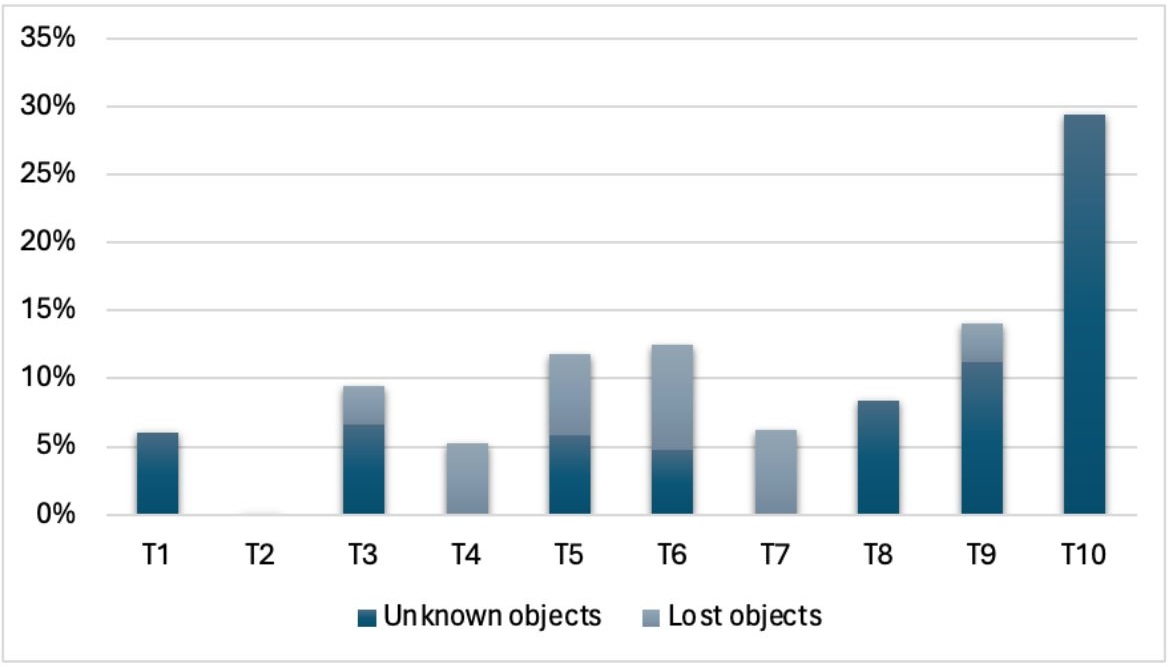
Successfully commissioning satellites is a complex and challenging process. First of all, being able to track the newly released asset is crucial to establishing a connection as soon as possible. A redundancy solution, in case public data is insufficient, can save the mission.
One crucial aspect of tracking is the use of Two-Line Element sets (TLEs). Without a good first TLE, it becomes nearly impossible to find the satellite and therefore establish a reliable connection with it, leading to potential mission failures. For the Transporter-10 mission, it took 9 days for SpaceTrack to release the TLEs. During this time, ground stations work diligently to establish connections and confirm the operational status of each satellite.
Conclusion
The LEOP success rates highlight the critical importance of accurate and timely tracking in space missions. The challenges faced during the post-launch phase, particularly during the separation and commissioning of satellites, reveal the complexity of modern space operations. The delay in tracking can significantly impact the ability to establish connections for commissioning, potentially leading to initially preventable mission failures.
As orbital congestion grows, efficient space traffic coordination and reliable tracking systems are essential for the continued success and safety of space operations.
* Fernández, L.A., Wiedemann, C. & Braun, V. Analysis of Space Launch Vehicle Failures and Post-Mission Disposal Statistics (2022).