

Guide
The need for launch and early operation services.
Christopher Kebschull · 3 min read · 28 March 2024
For satellite operators, the launch of their spacecraft is the most exciting and frightening thing at the same time. The highest risk of losing the mission is in these early operational stages. Assuming the launch performs nominally and reaches the envisaged target orbit, the spacecraft must be released from the upper stage or ejected from the dispenser. For launches with many spacecraft onboard, batch releases must ensure separation between each bus on their new orbit.
Following the release, the spacecraft needs to be commissioned and made ready for the first operational steps. The operator needs to acquire a signal from the spacecraft and establish contact to communicate, get the first telemetry, and send commands. The initial position estimate is usually shared by the launch provider. Without updated orbital data, the operator risks losing contact and cannot maneuver safely.
The challenges of LEOP
- Monitoring spacecraft separation from the upper stage
- Monitoring spacecraft separation from the satellite dispenser
- Identifying the own spacecraft from a batch of released objects
- Establishing first contact
- Getting a first accurate orbit solution
- Preparing first safe maneuvers
- Maneuvering into the foreseen target orbit
Especially first-time operators need to prepare well for this critical phase, as this requires working against the clock.
Preparation is key
To mitigate risk and keep the young mission successful, operators need to:
- Create an operations plan from contacting the spacecraft after release to maneuvering it into the target orbit and slot
- Ensure data will be available, from the RF antenna, onboard GNSS sensors, and third-party SSA/STM services
- Set up processing chains for orbit determination, orbit propagation, correlation, and conjunction screening
- Dry-run the plan by checking interfaces and data formats, especially when third-party providers are involved
Data exchanged with partners usually follows a standard like the Orbital Ephemeris Messages (OEM), defined in the CCSDS ODM document. Deviations in reference frames, timescale definitions, or units (meters vs. kilometers) can cause issues, a rehearsal scheduled well in advance reveals these problems in time to fix them.

Case study: GEO mission LEOP support
In this example, OKAPI:Orbits provided LEOP support for a GEO operator. A rehearsal with the operator revealed that OEMs were prepared in a specific format (CCSDS OEM as KVN instead of XML or JSON). Dedicated email accounts were set up for the operations teams on both sides, quick response times are key at this delicate moment.
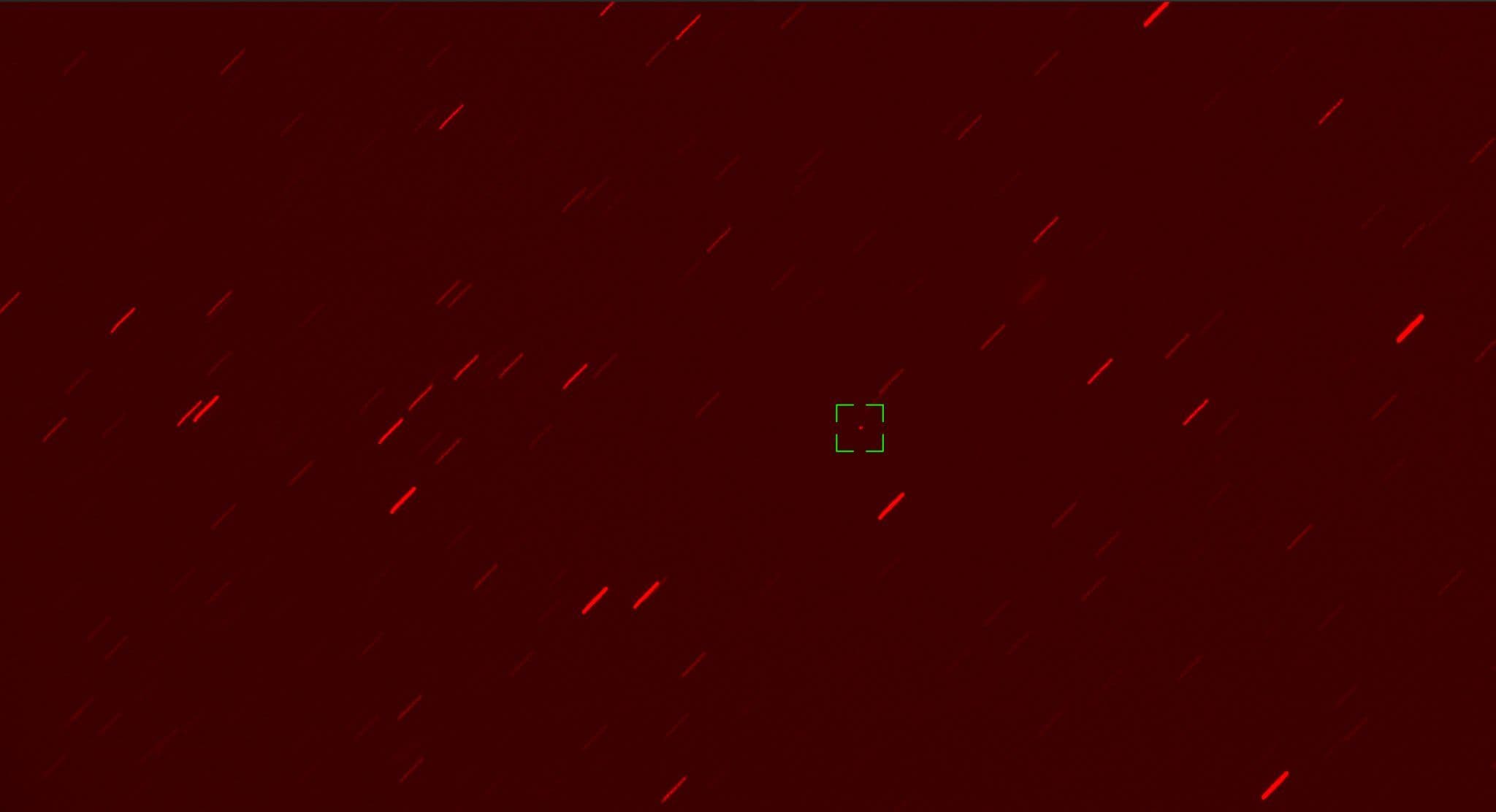
The launch was pushed back multiple times due to weather conditions, leading to updates of the initial TLE and re-evaluation of visibility conditions within the contracted telescope networks. When the launch finally occurred, it placed the upper stage exactly where predicted, allowing first telescope observations.
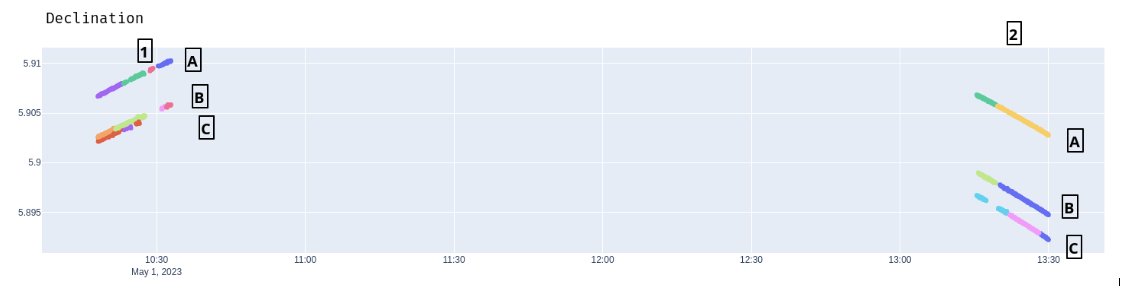
After deployment, three new space objects were detected and correlation between subsequent observation epochs was needed. The identification of our target satellite was done by means of orbital elements. The first solutions were used to re-observe the satellite as it moved away from the upper stage, generating OEMs and TLEs for the first conjunction screening.
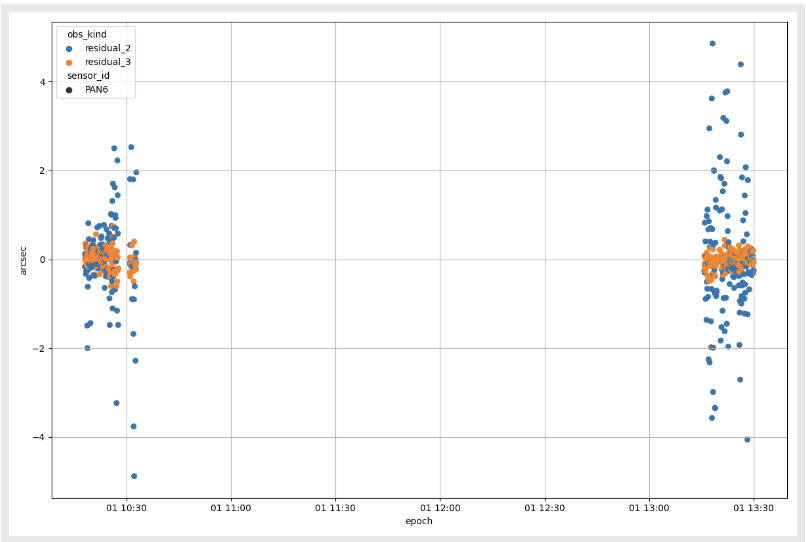
The thruster ignition was successful, paving the way for raising the orbit and moving into the envisaged GEO slot. The LEOP was complete.
Conclusion
In this campaign we provided LEOP support for a GEO mission, over 30 days from release until the target slot was reached. Our sensor tasking, correlation, and orbit determination provided near real-time orbit solutions that guided the operations team in quickly performing the first maneuvers. Our LEOP service showed much quicker results than public providers achieve, hours instead of days or weeks.
Learn more about OKAPI:LEOP, or get in touch with our team.