

News
OKAPI:Orbits brings debris risk analysis into real world decision making.
OKAPI:Orbits · 3 min read · 7 May 2026
Why crowded orbits are accelerating the commercial use of Europe's primary tool for evaluating collision risks in orbit.
Braunschweig, Germany, 7 May 2026
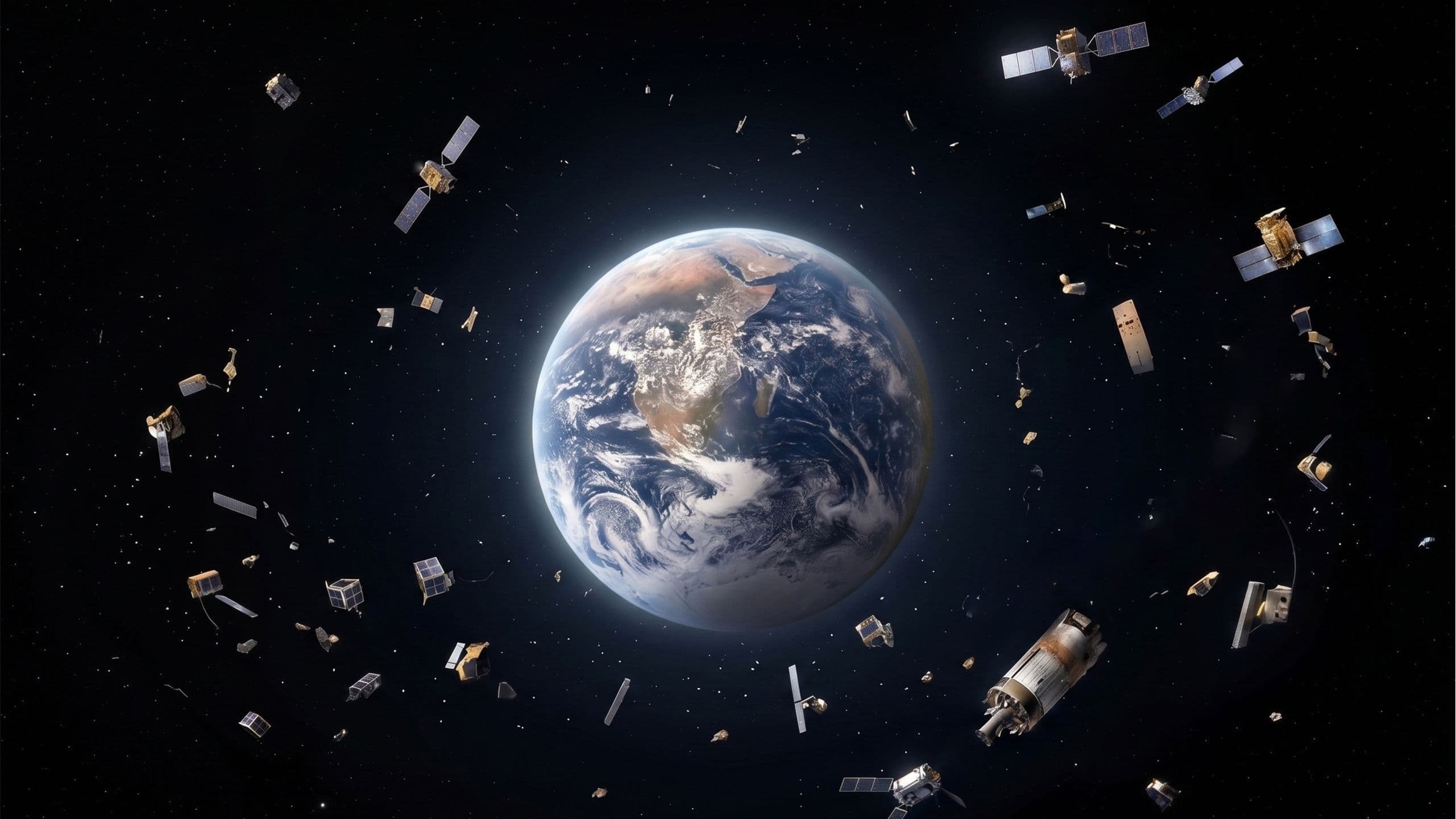
As Earth orbit becomes increasingly congested, managing collision risk has evolved from a mission design activity into a day-to-day operational challenge. Software originally developed by the European Space Agency (ESA) to support debris risk analysis and debris mitigation compliance has provided the foundation for tools now used by industry in operational satellite missions, enabling responsible decision-making in an increasingly complex orbital environment.
At the center of this transition is DRAMA (Debris Risk Assessment and Mitigation Analysis), ESA's debris risk analysis tool developed since 2004 with contributions from European industry through various ESA projects. DRAMA was developed by ESA to provide mission designers and operators with a unified, scientifically grounded capability for analysing space debris risk and supporting compliance with debris-mitigation requirements. As operational demands have increased, this analytical foundation has proven essential beyond the design phase.
Through collaborative project work with ESA and by integrating DRAMA calculations with its own expertise, data models, and software infrastructure, OKAPI:Orbits developed capabilities that evolved into OKAPI:Soteria, a commercial software solution designed to support operational mission design. Building on this foundation, OKAPI:Soteria not only applies DRAMA-based analyses but also integrates additional mission design and operational features beyond DRAMA itself, enabling operators to assess debris-related risks within a broader mission planning and operational context.
Soteria applies established analyses based on ESA-developed debris risk methodologies in an operational context, supporting mission planning, regulatory and licensing processes, and ongoing operational assessments throughout the satellite lifecycle. By combining research-based analysis with operational workflows, Soteria helps operators assess debris-related risk, understand uncertainty, and support informed decisions in high-stakes mission scenarios.
"OKAPI:Soteria supports our debris risk assessments and regulatory processes throughout the mission lifecycle."
Patrick Fülöp, Programme Manager, Remred, HULEO Mission
This evolution from ESA-developed software to operational commercial use illustrates how ESA tools can enable tangible business applications while supporting safe and sustainable space activities. As the orbital environment becomes more congested, the availability of reliable, scientifically grounded analytical tools is critical for responsible space operations and long-term space safety.
By fostering collaboration between ESA and European industry, and by enabling companies such as OKAPI:Orbits to combine publicly developed research with proprietary expertise, ESA helps translate advanced analytical tools into operational commercial services. Through solutions like Soteria, OKAPI:Orbits demonstrates how industrial innovation can build on ESA research to support safer, more sustainable and responsible space operations.
About OKAPI:Orbits
OKAPI:Orbits delivers Space Situational Awareness that supports transparent, defensible decision-making for organizations operating in orbit. By combining advanced analytical methods with deep expertise in Space Surveillance and Tracking and Space Traffic Management, OKAPI:Orbits helps operators assess risk, understand uncertainty, and manage complex orbital environments responsibly. OKAPI:Orbits supports space missions across their full lifecycle, from pre-launch to end-of-life operations.
Media contacts
For OKAPI:Orbits
João Saraiva, Marketing Manager
joao@okapiorbits.com
For ESA Media Relations
Bernhard von Weyhe, Senior ESA Media Relations Officer
ESA/ESOC Darmstadt
bvw@esa.int